Smart Home Technology
Technology, quietly integrated.
Whole-home automation, distributed audio, dedicated theater, and enterprise-grade network infrastructure — designed to disappear into the architecture of the home.
Considered from the wall studs out
The best luxury technology is the technology you do not see. In the most refined Piper Glen homes, automation is planned from the earliest framing conversation — conduit paths, speaker placements, display sightlines, rack locations, and network head-ends all worked out in coordination with the architect and builder. Retrofitted afterthoughts almost always show. Planned systems never do.
The result is a house that responds without asking to be noticed. Shades lower at sunset. Path lighting warms as evening deepens. Music follows a family from the kitchen to the terrace. A theater comes to life from a single button. A guest never sees a rack, a keypad, or a router — because none of them were placed in a room a guest occupies.
The full stack
A Piper Glen technology package typically spans several interdependent systems, each specified in coordination with the others:
- Whole-home lighting and shade control. Scene-based control that follows the day, the season, and the family — with keypads and app control replacing traditional switch banks.
- Distributed and dedicated audio. In-ceiling and in-wall speakers designed for the room's acoustics, with dedicated listening rooms and multi-source distribution to every space that should have sound.
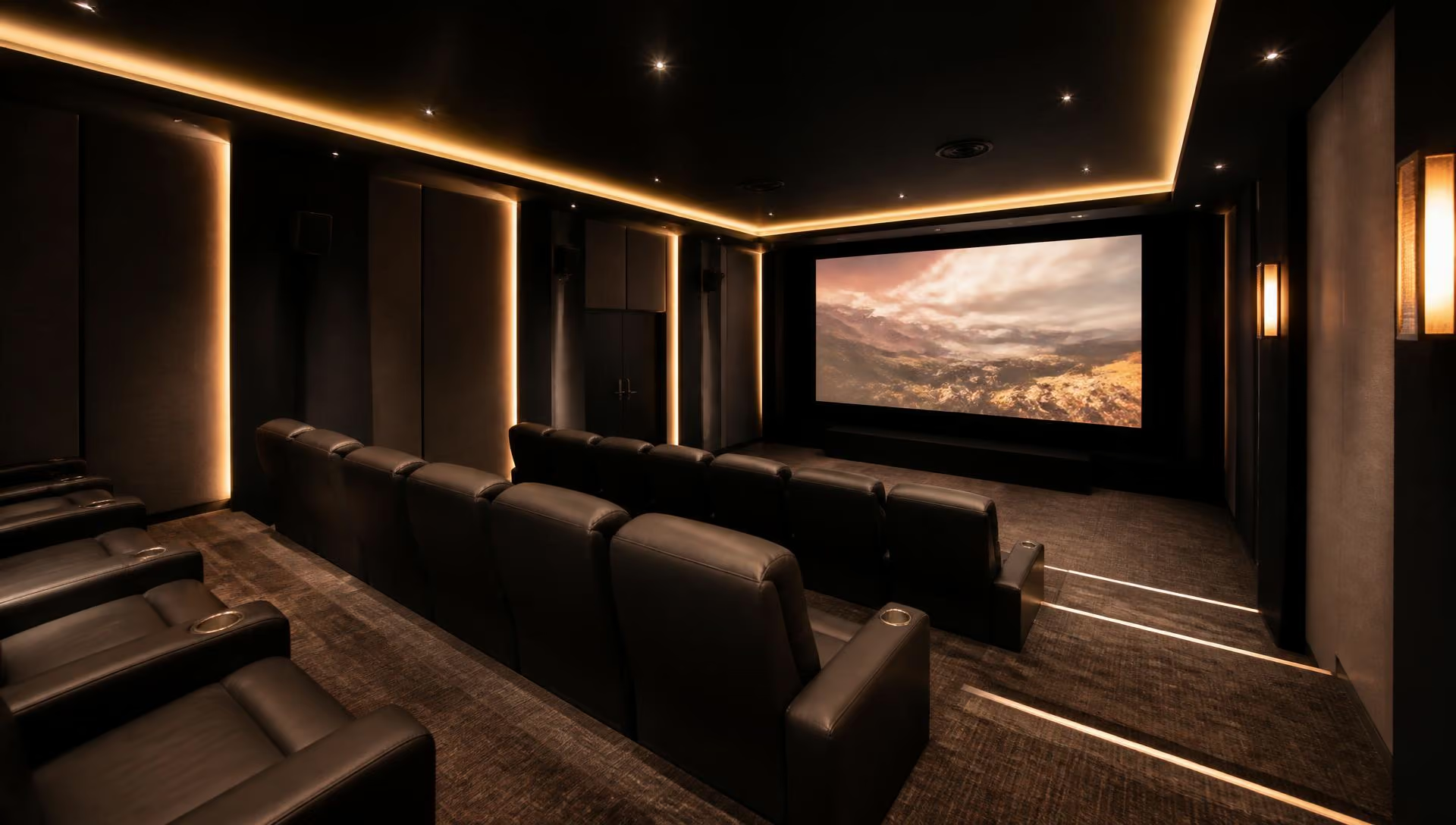
- Home theaters and media rooms. Purpose-built rooms with reference-grade projection or displays, calibrated audio, acoustic treatment, and seating tiered for sight lines.
- Golf simulator design and integration. Screen, projection, launch monitor, hitting surface, and acoustic treatment — coordinated with the room's structural and mechanical package during construction.
- Enterprise-grade wired and wireless networking. Structured cabling, managed switches, mesh Wi-Fi, and redundant internet — the invisible backbone of every other system.
- Security, surveillance, and access control. Camera coverage, monitored intrusion, gate and door access, and integration with the automation platform.
- Outdoor entertainment and landscape audio. Weatherized audio and video for pavilions, pools, and terraces, tuned for the scale of the outdoor space.
- Climate, hot water, and mechanical integration. Zone-based HVAC control, hot water recirculation, and integration with lighting and occupancy scenes.
New construction vs. renovation
The scope of integration achievable in new construction is categorically different from what is possible in a retrofit. During framing, conduit and low-voltage cabling can be pulled to every future need — speakers not yet purchased, displays not yet designed, network drops in every wall likely to hold a workspace. The incremental cost is small; the future flexibility is enormous.
Whole-home renovations sit between the two. When walls are opened for structural, kitchen, or bath work, that same framing window can be used to bring the technology package to new-construction standards. This is the moment where the biggest gains happen.
Retrofits into finished, occupied homes are still valuable — but the integration depth is bounded by what can be run through existing wall cavities without opening drywall. Wireless solutions have improved dramatically, but nothing wireless yet matches structured cabling for a house that will still be in service in twenty years.
The network is the foundation
Every other system depends on the network. In Piper Glen homes, the standard is enterprise-grade: structured cabling from a central rack, managed switches, business-class internet with a redundant secondary carrier, and Wi-Fi designed for coverage rather than convenience. When the network is right, everything else feels effortless. When it is not, every other system feels broken.
Peters Audio Video
Peters Audio Video is Piper Glen's preferred technology partner. Their team specializes in the discreet, architecturally-integrated work that defines the community's most considered homes — with an approach that starts at the framing stage, coordinates with the builder and architect throughout, and delivers a system the family will use daily without ever having to think about it.
Frequently Asked
Questions & answers
Can smart home systems be retrofitted into an existing home?+
Yes. Peters Audio Video works on both new construction and retrofit projects, though the scope and integration depth increase significantly when planned as part of a renovation or new build. Retrofits into finished, occupied homes are bounded by what can be run through existing wall cavities without opening drywall.
Do you build golf simulators?+
Yes. Golf simulator rooms — including screen, projection, launch monitors, hitting surface, and acoustic treatment — are a common Piper Glen engagement, typically coordinated with the builder during construction or a major renovation.
When in the build process should we bring in a technology partner?+
As early as possible. The most valuable coordination happens during architectural design and before framing. Conduit paths, speaker locations, rack placement, and network drops should be specified alongside the mechanical and electrical plans — not added afterward.
What automation platforms do you work with?+
Peters Audio Video is platform-agnostic and specifies the control system that best fits the home's scope, family workflow, and future-proofing goals. The platform is a means to an end — the goal is a system the family uses effortlessly for decades.
Is a home theater still worth building?+
For the right family, yes. Streaming quality has caught up with what a great theater used to require, but the experience of a purpose-built room — calibrated audio, tiered seating, reference projection — is not replicable in a family room, and it remains one of the most-used spaces in homes that have it.
How does landscape and outdoor audio hold up?+
Modern weatherized outdoor systems are engineered for the climate. Piper Glen homes with pavilions, pools, and outdoor kitchens routinely include distributed outdoor audio, and in most cases outdoor television as well, all tuned for the specific scale of the space.
What kind of internet and network setup is standard?+
The Piper Glen standard is enterprise-grade: structured cabling from a central rack, managed switches, business-class internet with a redundant secondary carrier, and Wi-Fi designed for whole-property coverage rather than single-room convenience.