History
Forty years of Piper Glen.
How a mid-1980s master plan around an Arnold Palmer course became one of South Charlotte's most established addresses.
A master plan, not a subdivision
Piper Glen began in the mid-1980s as a master-planned golf-course community rather than a conventional subdivision. The distinction matters and is still legible on the ground today. In a subdivision, roads are laid to maximise lot yield. In a master-planned golf community, the course routing comes first and the streets are drawn around it, which is why Piper Glen's road network curves, why its lots vary so much in shape, and why so many homes back to open green space instead of to each other.
The Palmer course opens
The Arnold Palmer Signature course opened in 1988 and carried the Tournament Players Club name — a designation more commonly attached to standalone tournament venues than to a course threaded through a residential neighborhood. That combination gave the community an identity from day one that most new Charlotte developments spend decades trying to build, and it explains why the neighborhood and the club are still spoken about as a single thing. Our TPC Piper Glen explainer untangles the two, and our course guide covers the design itself.
Building out in phases
Homes were not built all at once. Sections of Piper Glen were released and constructed over an extended period, and each phase reflected the prevailing tastes of its moment — heavier traditional brick and stucco in the earliest years, evolving proportions and floor plans as the community filled in, and a continuing stream of gut renovations and rebuilds since. This phased build-out is the reason the community reads as a collection of distinct residential sections rather than one uniform streetscape. Our neighborhoods guide covers those sections individually and our architecture guide traces the styles.
South Charlotte grows up around it
The single biggest change to Piper Glen came from outside its gates. When the community started, this stretch of Mecklenburg County was on the edge of Charlotte's development frontier. Over the following decades three things reshaped it: the completion of the I-485 outer loop, the emergence of Ballantyne as a major office and medical employment centre, and a wave of retail development along the Rea Road corridor — including the centres that carry the Piper Glen name.
The practical consequence was accessibility. A community once considered remote from Uptown became a straightforward commute to several of the region's largest employment centres, while retaining the tree cover and low density that had attracted its first residents. Today's convenience — described in our shopping and dining guide — is a direct product of that thirty-year build-out.
Maturity as an asset
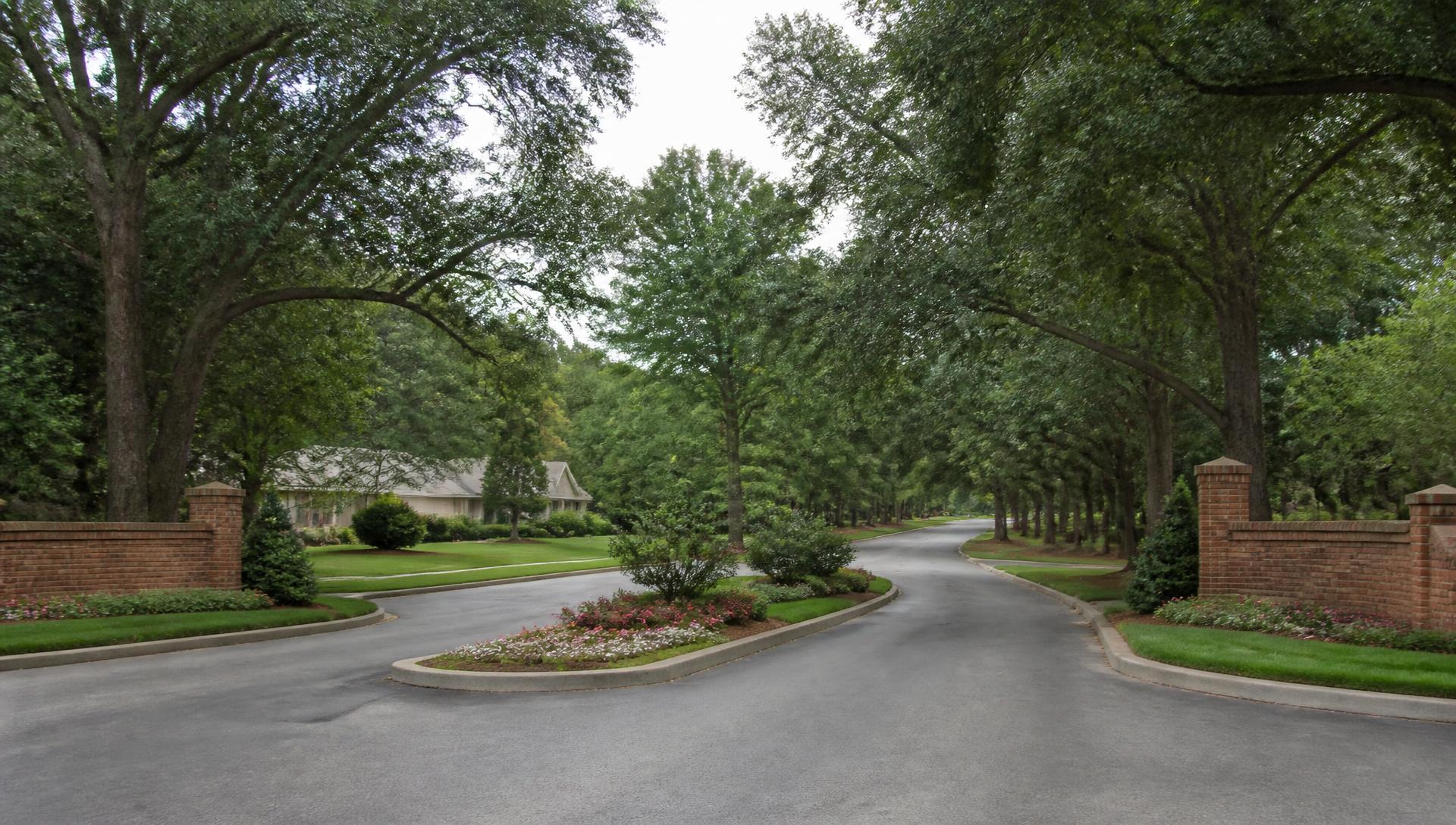
Time has done something to Piper Glen that money cannot buy quickly. Hardwoods planted at build-out are now full canopy. Landscaping has layered and filled. Streets have the settled quality that only comes from decades of continuous occupancy. Newer South Charlotte communities can match the square footage and the finishes; they cannot yet match the trees.
That maturity comes with the obligations of any established neighborhood: houses of a certain age need roofs, systems, windows, and kitchens brought forward, and a meaningful share of transactions here are followed by renovation. See our custom homes and renovation guide for how owners typically modernise these houses, and home values for how condition and vintage interact in the market.
On sources and accuracy
We describe Piper Glen's history only to the level that can be supported by public and published sources — founding period, course design and opening, and the documented growth of the surrounding area. We deliberately avoid the invented anecdotes and unsourced statistics common in neighborhood marketing copy. If you hold documentation that corrects or deepens anything here, tell us and we will review it.
Frequently Asked
History questions
When was Piper Glen built?+
Piper Glen was master-planned in the mid-1980s as a golf-course community, and its Arnold Palmer Signature course opened in 1988. Home construction rolled out in phases over the following decades, which is why the community contains housing of noticeably different vintages.
Who designed the golf course at Piper Glen?+
The course was designed by Arnold Palmer and opened in 1988. It carries the Tournament Players Club (TPC) name, which is uncommon for a course routed through a residential neighborhood.
Is Piper Glen an older or newer Charlotte neighborhood?+
By South Charlotte standards it is established rather than new. Development began in the late 1980s, so the tree canopy, streetscape, and landscaping are mature — a visible difference from subdivisions built in the last decade in the same price range.
How did South Charlotte change around Piper Glen?+
When Piper Glen began, this part of Mecklenburg County was far less developed. The completion of the I-485 outer loop and the growth of the Ballantyne employment corridor transformed accessibility and retail in the surrounding area, turning a relatively remote golf community into a well-connected part of the metropolitan area.
An established address
Walk the streets forty years on.
The canopy, the setbacks, and the way the streets bend around the course are best understood in person.
Schedule a Private Tour