Grounds
Landscaping in Piper Glen.
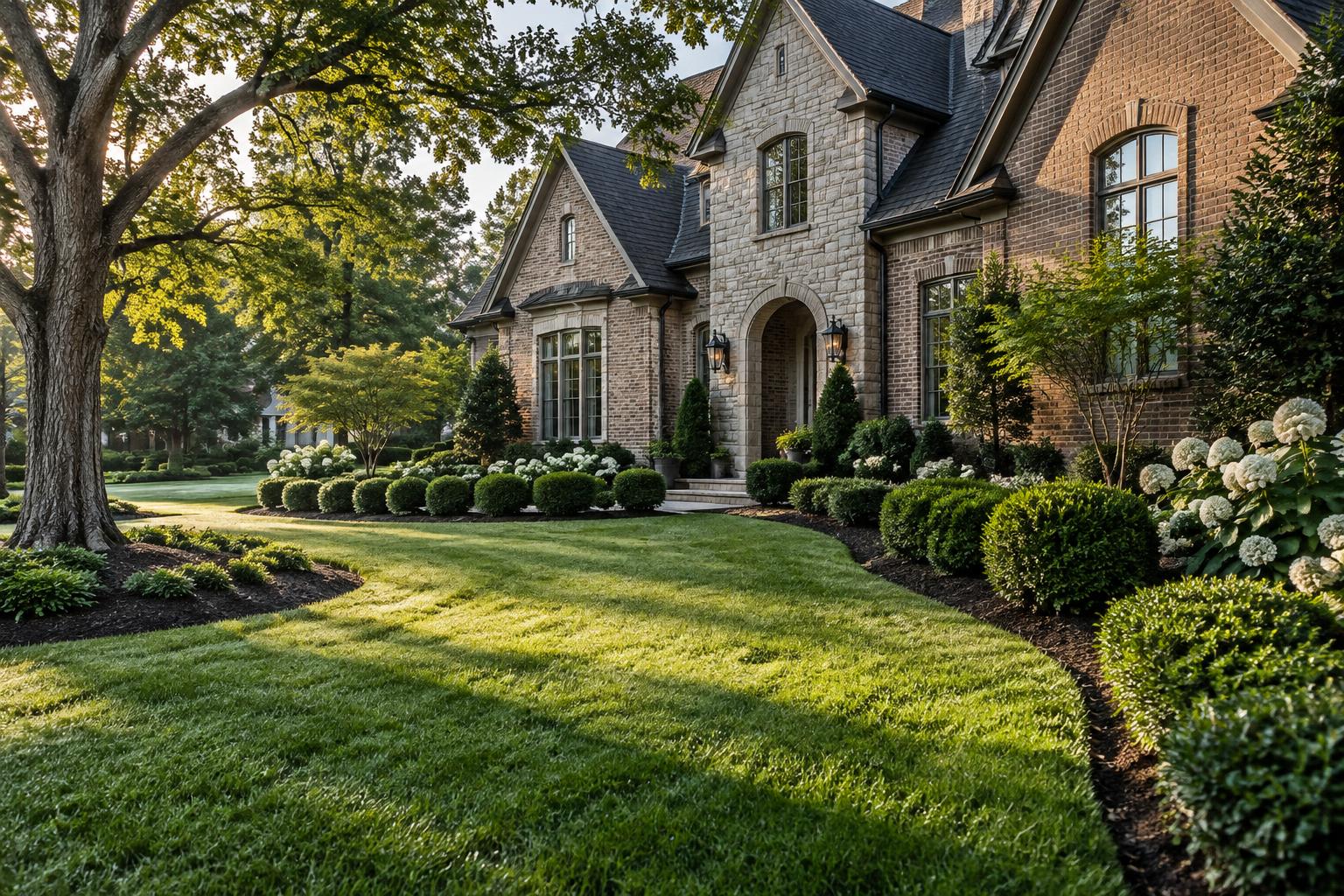
Mature canopy, deep front lawns and a long growing season. What the ground here actually asks for, season by season.
The setting you are gardening in
Piper Glen was laid out around a golf corridor and kept much of the hardwood and pine canopy that was already on the land. Three decades on, that is the condition every landscape plan here starts from: generous setbacks, deep front lawns read from a curving street, and large trees casting long shade across turf that would rather have sun. The soil underneath is Piedmont clay — heavy, slow to drain, and prone to compaction — which is the quiet reason so many failed lawns here were never a seed problem at all.
Good landscaping in this community is therefore less about ornament than about a few structural decisions made correctly: the right turf for the light a lot receives, bed lines that hold, canopy managed rather than fought, and water applied to a clay profile in a way it can absorb.
Turf, and the problem of the transition zone
Charlotte sits in the transition zone, the band of the country where summers are too hot for cool-season grasses and winters too cold for warm-season ones to stay green. There is no turf that is simply correct here; there is a trade.
- Warm-season turf — bermuda and zoysia — thrives in full sun, takes heat and traffic, and forms the dense carpet associated with golf-corridor frontage. The cost is colour: it goes dormant and straw-toned from the first hard frost until spring warms the soil.
- Tall fescue holds green through winter and tolerates the shade that mature oaks throw, which is why it dominates the older, more wooded streets. The cost is summer: fescue thins under Carolina August heat and needs to be re-established most autumns.
The practical test is light. Count the hours of unobstructed sun a lawn receives in July, not in March when the canopy is still bare. Below roughly half a day, warm-season turf will disappoint regardless of how it is fed; in deep shade under a mature canopy, the more honest answer is often not turf at all but a shade bed of groundcover, fern and mulch.
The calendar, roughly
The Piedmont growing season is long, and the work is seasonal rather than continuous. Broadly: late winter is for structural pruning and dormant bed work; spring is for pre-emergent timing, mulch, and the first fertility on warm-season turf as it breaks dormancy; summer is for irrigation discipline and raised mowing heights; autumn is the important one, when cool-season lawns are aerated and overseeded and when the clay profile is most receptive to being opened up.
Two of those deserve emphasis. Core aeration matters more on clay than almost any other input, because it relieves compaction and gets seed, air and water into contact with soil rather than thatch. And overseeding is an autumn job — fescue sown in spring spends its first summer as a seedling and rarely survives it. For the current seeding and fertility windows specific to Mecklenburg County, the North Carolina Cooperative Extension publishes local schedules; those are worth following over any national chart.
Beds, edges and the structure people actually see
Most Piper Glen frontages are experienced at fifteen miles an hour from the street. At that speed the eye reads lines and masses, not individual plants — which is why the two highest-return items on a front landscape are a crisp bed edge and a clear massing of evergreen structure.
- Edging. A deep spade-cut trench or a recessed steel edge gives a clean separation between bed and turf, keeps mulch where it belongs after a thunderstorm, and re-reads as maintained even in January. Plastic roll edging heaves out of clay within a season or two and is generally a false economy here.
- Massing. Boxwood, holly, and other broadleaf evergreens carry the composition through the dormant months when a warm-season lawn has gone tan. Seasonal colour is a grace note on top of that structure, not a substitute for it.
- Mulch depth. Two to three inches, pulled back off trunks and stems. Mulch volcanoes piled against a tree are among the most common and most damaging habits in Charlotte landscapes.
Where a landscape is being redesigned alongside interior or architectural work, it pays to treat it as one composition rather than three. Homeowners approaching it that way usually involve their designer and builder together — the same logic behind our notes on Piper Glen architecture and interiors, and the reason interior work at this level is often handled by a practice such as Emerald & Oak Design, with exterior envelope and hardscape run through Peters Custom Homes.
Canopy
The mature trees are the reason these streets look the way they do, and they are the part of the landscape most easily ruined by well-meant work. Structural pruning by a certified arborist — thinning, deadwood removal, clearance over roofs — extends the life of a large oak; topping shortens it and produces weak regrowth. Roots run wide and shallow in clay, so grade changes, trenching and heavy equipment inside the drip line do more harm than most owners expect.
Canopy also sets the terms for everything beneath it. Shade, leaf litter, and root competition are the usual reasons a lawn fails in an older section, and the remedy is frequently to stop fighting it: raise the canopy where appropriate, and convert the hopeless margins to beds.
Water on clay
Piedmont clay accepts water slowly and then holds it. Long single cycles run off down the slope of a front lawn; short, repeated cycles soak in. Most irrigation trouble here is a scheduling problem rather than an equipment problem — infrequent deep watering early in the day, with cycle-and-soak on slopes, produces deeper roots and less disease than daily light watering in the evening. Any irrigation that draws from a well, or any new system installation, is worth confirming against both local rules and your section's covenants before work begins.
What the covenants tend to govern
Piper Glen is a covenanted community, and exterior changes are commonly subject to review. The line usually falls between maintenance and alteration: mowing, pruning, mulching and seasonal planting are ordinary; hardscape, walls, fencing, significant tree removal, and structural changes visible from the street typically require approval first. Requirements differ by section and change over time, so treat your own recorded documents and the association's current process as authoritative. Our notes on how the HOA is organised explain the structure in more detail, and Living in Piper Glen places grounds work inside the wider rhythm of the year.
Nothing here is horticultural, legal or covenant advice. Verify seasonal timing with the North Carolina Cooperative Extension and all approval requirements with your association before starting work.
Frequently Asked
Landscaping questions
What kind of grass grows best in Piper Glen?+
South Charlotte sits in the transition zone, where neither warm-season nor cool-season turf is fully at home. Most Piper Glen lawns are one of two things: a warm-season grass such as bermuda or zoysia, which is dense and heat-tolerant but goes dormant and tan from late autumn into spring, or tall fescue, which stays green through winter but thins in the worst of a Carolina August. Which one a given lot suits depends mostly on how much direct sun it receives.
When should a fescue lawn be overseeded in Charlotte?+
Autumn. Cool-season seed germinates when soil temperatures fall out of the summer range and the seedlings have the mild, wetter months ahead of them to root before heat returns. Spring seeding in the Carolina Piedmont generally produces grass that dies in its first July. Local extension services publish the current seeding windows for Mecklenburg County, and they are the right reference rather than a national planting chart.
Do I need approval before changing my landscaping in Piper Glen?+
Assume yes for anything structural or visible from the street, and check first. Communities of this kind commonly place exterior changes — hardscape, walls, fencing, tree removal, irrigation wells, major bed reconfiguration — under an architectural or covenant review process, while routine maintenance, mowing, and seasonal color are not reviewed. The governing documents for your specific section are the authority; nothing on this page substitutes for them.
Why does edging make such a visible difference here?+
Piper Glen's front landscapes are mostly read from a moving car on a curving street, so the eye registers the line between bed and lawn long before it registers a single plant. A deep, consistently cut spade edge or steel edge holds that line through the season, keeps mulch off the turf, and is the cheapest single thing that makes a property look maintained.
What should I know about mature trees on a Piper Glen lot?+
The canopy is one of the community's defining assets and also its most expensive maintenance item. Large willow oaks and pines shade roofs, drop steadily, compete with turf for water, and need periodic structural pruning by a certified arborist rather than topping. Tree removal on a covenanted lot is frequently subject to approval, and it is worth confirming that before scheduling any work.
How much of the year is the lawn actually growing?+
More than newcomers expect. The Piedmont growing season is long, and a warm-season lawn in full sun will need weekly attention from late spring through early autumn, with a shoulder season either side. That length is why most owners here settle into a maintenance rhythm rather than a series of projects.
Grounds and setting
See how the canopy reads in person.
Lot orientation, shade and frontage vary enormously street to street in Piper Glen. Walking them is the only reliable way to judge it.
Schedule a Private Tour